At KOK Maison, our expertise lies in rattan, wicker and the art of weaving, a tradition passed down for over 100 years. We have no desire to downplay the qualities of these materials, but even less to attribute virtues to them that they do not possess. Yes, rattan is a natural material. But it grows in Indonesia, is processed there, and our furniture then travels thousands of kilometres before arriving in Europe. We, of all people, would be in no position to wave the green flag without first checking what lies behind it.


Rather than relying on gut instinct, we decided to have the environmental impact of five iconic pieces from the collection assessed across their entire life cycle by an independent body: Eco-Impact.

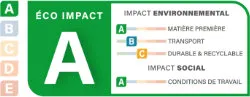
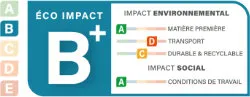
Without further ado, here are the results:
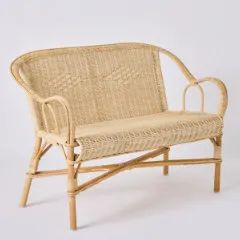
canapé Marcel

And if you’d prefer to understand the issues so you can make better choices in future, let KOK Maison’s 100 years of expertise and Eco-Impact’s solid scientific foundation explain what makes the difference.

Rattan, a great base

Before discussing environmental impact, a brief botanical overview is in order.

Rattan is neither bamboo nor strictly speaking a tree. It is a climbing palm vine (scientifically known as Calamus) that grows wild in the tropical forests of South-East Asia, mainly in Indonesia and the Philippines. Thorny and flexible, capable of reaching a hundred metres in length, it clings to the trees of the primary forest, using the canopy as a support to rise towards the light. Far from damaging the forest, it is an integral part of it: by connecting trees and branches, it forms a veritable network for animals and plants.

Harvesting it does not require felling trees. All that is needed is to unhook the vine and cut it to the required length. In certain regions of Borneo and Sumatra, rattan is planted in secondary forests, integrated into the dynamics of the existing ecosystem, without ploughing or deforestation.

Like any plant, rattan absorbs atmospheric CO₂ through photosynthesis as it grows and stores it in its fibres. This carbon remains sequestered in the furniture for as long as it is in use. That’s a good start. But it’s what we do with this vine next that makes all the difference.

Fancy finding out more? Check out our article on rattan right here!

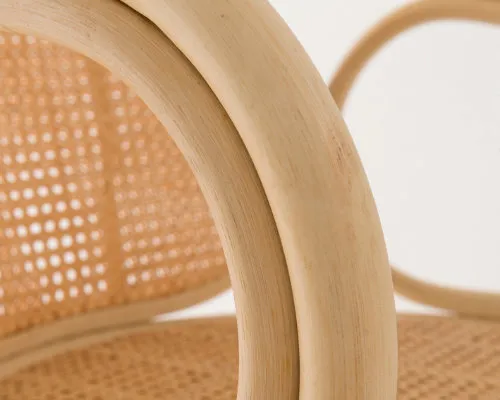
Zoom rotin fauteuil CONTOUR

There is rattan furniture and ‘rattan-style’ furniture

Just as a “woollen” jumper might contain only 10% wool, be wary of the “rattan” label. An armchair with a metal frame covered in woven rattan may be sold as a rattan piece of furniture. Except that its environmental footprint bears no resemblance to that of an armchair made entirely of rattan. And at the end of its life, no one is going to bother separating the metal from the fibre strand by strand. The furniture market remains largely dominated by combinations of steel, polyurethane foam and plastic – materials derived from fossil fuels, which are energy-intensive to produce. A piece of furniture made from bio-based materials therefore starts off with a much lower manufacturing footprint. But it really must be made from them!

The actual composition of a piece of furniture also has a direct impact on its end-of-life. A non-dismantlable assembly of rattan and plastic cannot be sorted properly; regardless of how much rattan it contains, it will likely end up being incinerated or landfilled.

At KOK Maison, we absolutely love rattan, so much so that we believe it should be the go-to material for everything (60%** of our rattan furniture items are made entirely of rattan!).

We occasionally use other types of wood for certain specific structures (15% of our range), and if other components such as cushions or glass panels need to be added, we ensure these elements are fully removable (20%). The remaining 5%, comprising rattan items with non-bio-sourced, non-removable components, are mostly variations on all-rattan versions (the Eugénie table with a laminated top is also available with a rattan top).

In practice, then, 95% of our indoor collection poses no end-of-life issues. If you’re looking for rattan furniture that’s ACTUALLY made of rattan, you’ve come to the right place!

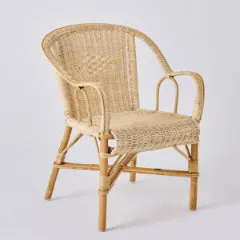
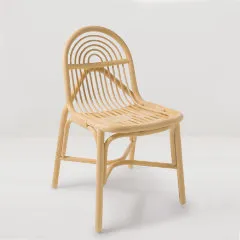
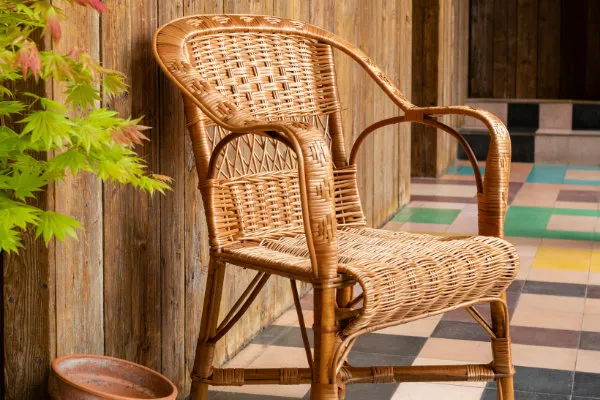
MARCEL rattan armchair - 4 kg

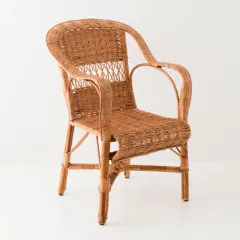
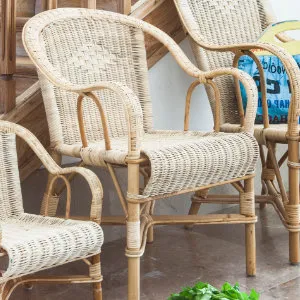
ANTONIN brown wicker armchair - 2.5 kg

The lightness of rattan: a practical and environmental benefit

This is a factor we never think about before making a purchase, yet it matters at every stage of a piece of furniture’s life cycle. Using fewer materials at the outset means fewer resources and less energy are required for manufacturing. Lighter transport means less fuel and less packaging. And at the end of its life, there is less to dispose of.

For example: the Strandmon armchair from IKEA, a classic upholstered armchair made of wood, polyurethane foam and steel, weighs around 30 kg. The Marcel rattan armchair weighs 4 kg. The Antonin wicker armchair weighs 2.5 kg.

This isn’t some particularly sophisticated eco-design initiative on our part. It’s simply the way we’ve been working for four generations: designing without frills, using only the amount of material strictly necessary to ensure the piece stands the test of time. Both rattan and wicker lend themselves naturally to this approach, and we see no reason not to make the most of them.

Where does the furniture come from, and how does it get here?

Yes, our products are made in Indonesia. And yes, they travel thousands of kilometres by ship before arriving in France. We’re not going to pretend that doesn’t happen…

But sea freight is by far the lowest-emission mode of goods transport: a container ship emits around 3 g of CO₂ equivalent per tonne per kilometre, compared with 80 g for a lorry and over 400 g for a cargo plane. The long distance involved therefore carries far less weight than one might imagine, especially when the furniture is light, sturdy, and does not need to be packed in industrial quantities of polystyrene to survive the journey.

In the case of rattan, its Indonesian origin is, moreover, a geographical necessity, not an arbitrary choice: this vine grows exclusively in the tropics. With wicker, on the other hand, which grows in Europe, we have other options…

European wicker, top of the class

Wicker changes the equation completely. Of the five products analysed by Eco-Impact, the Daddy armchair (made from wicker produced in Europe) achieved the best result: an A rating, with a 59% lower environmental impact compared to an average armchair on the market. The Marcel rattan armchair, made in Indonesia, also achieved an A rating, but with a 41% lower impact.

Bringing both materials and manufacturing closer together has an immediate and significant impact on the bottom line: fewer kilometres travelled, less energy consumed, and local expertise put to good use.

Wicker is a material that grows naturally in Europe. Stiffer than rattan, it allows for openwork, durable weaves using very little material. At KOK Maison, this material is deeply rooted in our history: KOK’s great-grandfather worked with both wicker and rattan.

In 2020, we relaunched a complete collection of wicker furniture and baskets, with the aim of putting European craftsmanship back at the heart of our range. A return to our roots that also represents a step forward.

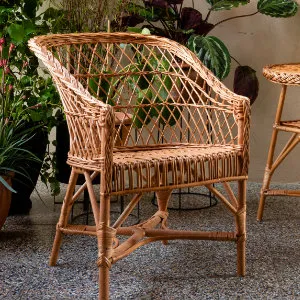
DADDY brown wicker armchair

Keeping your furniture in good condition for a long time

This is probably the most underestimated factor of all, and the most powerful. The environmental impact of a piece of furniture is spread out over its lifespan: a piece of furniture that lasts twenty years has, all other things being equal, an annual impact that is half that of a piece that lasts ten. Buying a poor-quality rattan armchair every three years is far from eco-friendly, even if the raw material is bio-based. And whilst you certainly have a role to play (our care guides are here to help), a piece of furniture that is well-designed from the outset also makes a difference.

The quality of manufacture

And that’s where we can say, without too much false modesty, that a hundred years of working almost exclusively with rattan and wicker certainly helps. Knowing this material inside out, its strengths and limitations, designing a form that stands the test of time and wear and tear… The big brands that launch a ‘rattan’ collection every spring simply don’t have the time to know all that.

A piece of furniture you never tire of using

A sturdy but ugly piece of furniture ends up at the tip just as surely as a beautiful but fragile one. At KOK Maison, we design pieces built to withstand changing fashions: the Marcel armchair has been in our catalogue since 1920! Rather than constantly reinventing the wheel, we delve into our archives and reissue pieces that have already proven their worth. Unlike other aspects of our approach that we’ve discovered along the way, this one has been intentional from day one.

To stray from natural materials when we feel it is necessary

For years, rattan has been left outdoors. On terraces, in gardens, exposed to the rain and the July sun. Exposed to the elements, UV rays and temperature fluctuations, rattan weathers. It’s not a question of the quality of the craftsmanship: this is what happens to most types of wood. We understand that its lightness makes it an attractive choice for outdoor use, but a beautiful material deserves better than five winters on a terrace.

Our outdoor collection meets our customers’ need to bring ‘rattan outdoors’: we retain the charm, the weave and the shapes of rattan, but in materials that are technically far better suited, designed to withstand being left outside all year round without any problems.

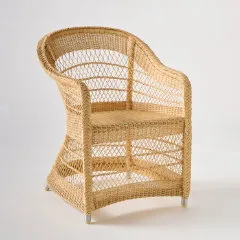
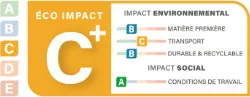
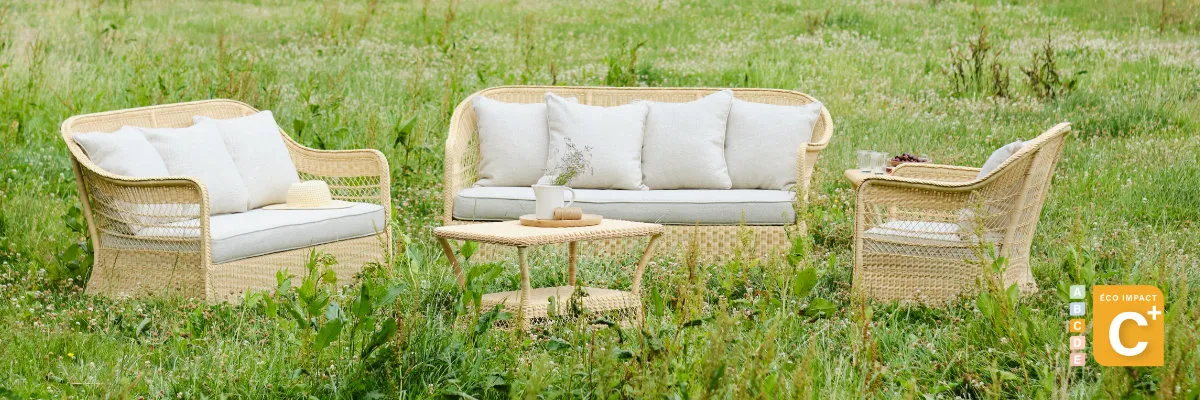
The C+ rating for our Biarritz armchair (in line with the market average) reflects the reality of its construction. However, Eco-Impact bases its calculations on an average lifespan of 7 years for garden furniture. Our customers keep their KOK garden furniture for much longer than that. We can’t prove it with figures (can you imagine? Trying to contact our customers 20 years after their purchases?), but we replace enough covers and cushions to know that our garden furniture lasts well beyond 10 years. When you divide the impact by thirty years of use, the C+ rating puts itself into perspective.

Ecology is also about people

Working with respect for our partners should be the norm, not a marketing pitch. We don’t present this as some special virtue. But since the question has been raised, we might as well answer it clearly.

We don’t have a social certification. No annual audit carried out by an external firm resulting in a nice certificate to display. What we do have instead is something older and perhaps more tangible: we’ve been working with the same workshops in Indonesia for over fifty years. Three generations of the KOK family, alongside their Indonesian counterparts.

This approach has a very direct consequence: we are not constantly chasing the lowest price. We don’t switch suppliers every two years just to save a few pence. When you build a business for the long term, it’s in everyone’s interest for it to succeed – the suppliers, the workshops, and ultimately, the customers.

… So, is rattan eco-friendly?

Yes! For the most part, rattan furniture has many advantages: it is bio-based, renewable, lightweight and helps sequester carbon. However, these benefits can be completely negated by a design that combines materials that cannot be separated, unnecessarily polluting transport, a short lifespan, or simply poor quality that means you’ll have to buy a new one in three years’ time.

What the Eco-Impact study confirmed is that our way of working – even though it isn’t the result of a formal eco-design strategy – works in our favour: a vast majority of our products are made from a single bio-based material, are lightweight, designed to last, and manufactured by people who have been doing this for a long time.

It turns out that what we’ve been doing for the past hundred years is exactly what the furniture of tomorrow needs.


* You can find their excellent explanations of their method here:

** Based on our indoor collections for early 2026

Related products