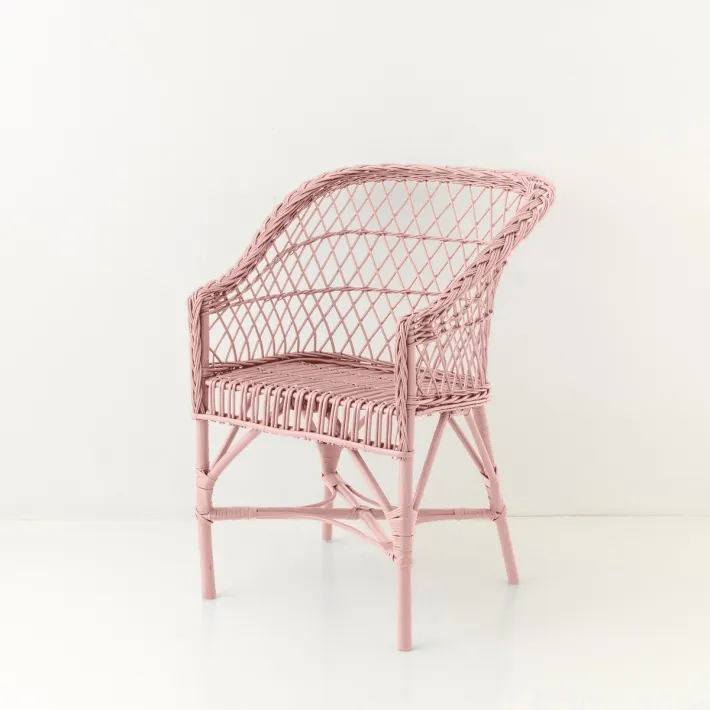
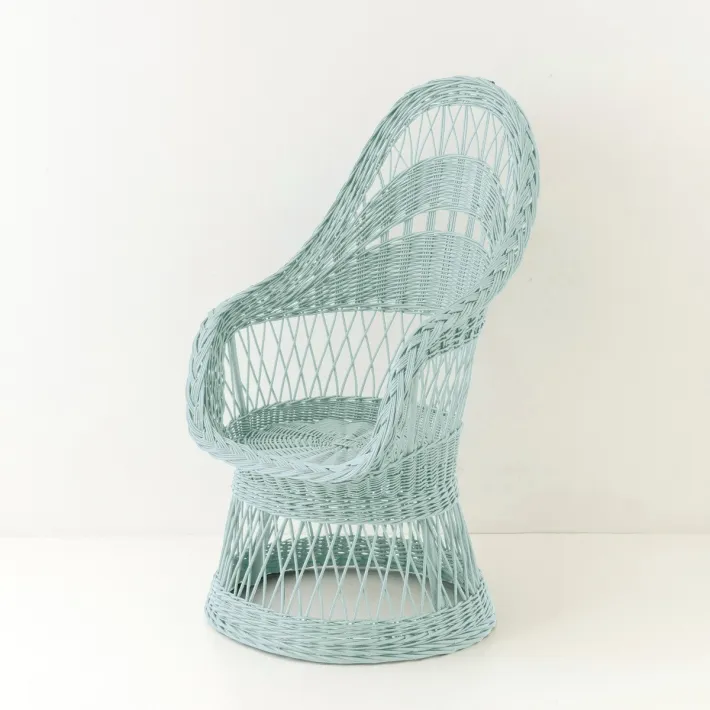
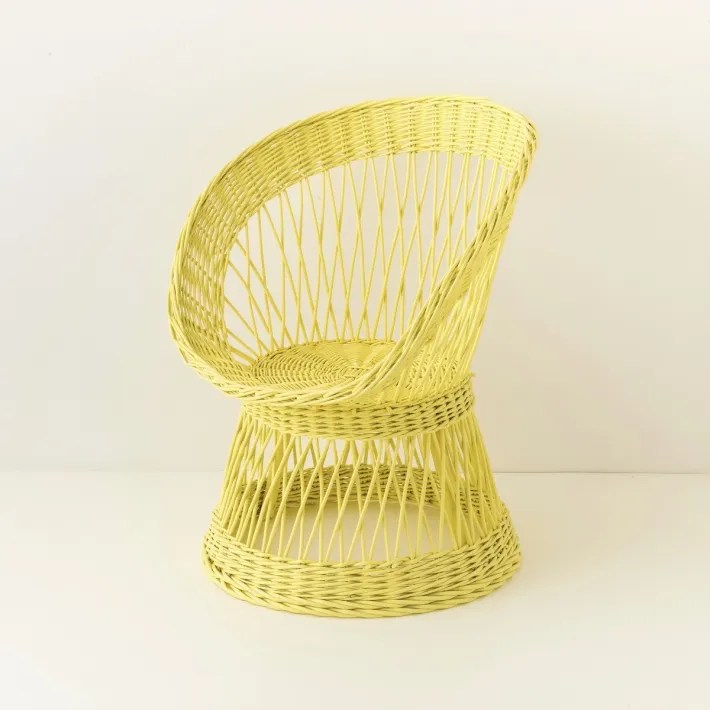
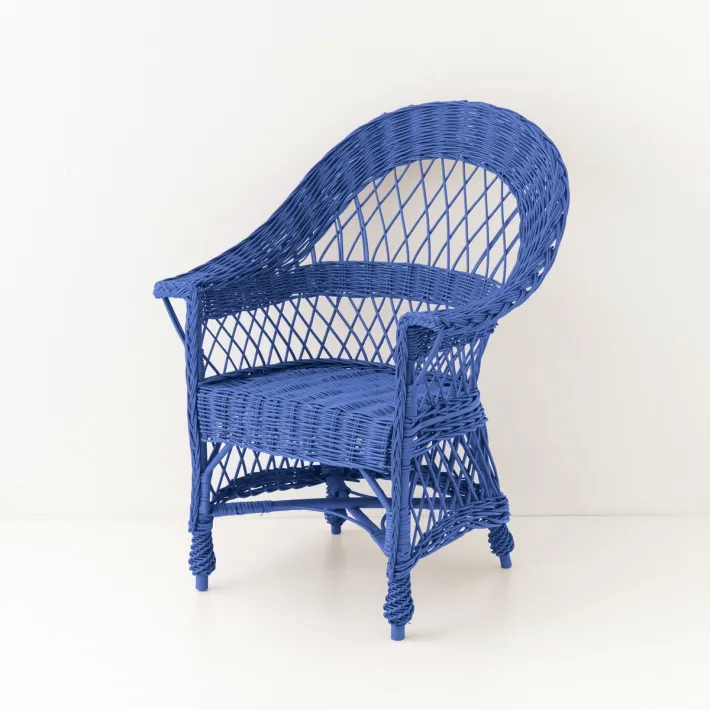
Having been supplanted by rattan for many decades, wicker is making a strong comeback.
Although often confused, these two fibres are in fact very different. Of tropical origin (85% from Indonesia), rattan bends very easily when steamed, but this flexibility means the manufacturer has to add extra reinforcements, arches and frames, which can make the product heavier. Wicker, a plant from temperate climates (it is simply willow harvested in fine strands, which grows throughout Europe), is significantly stiffer. The curves will be less pronounced than with rattan, but for the same strength, less material is required. The product is lighter, both physically and visually; some armchairs are even constructed without a frame, simply woven like a basket, whilst remaining very sturdy. From an environmental perspective, there are two benefits: less material for the same function, and shorter transport distances. Labour costs in Asia, which have long been a hindrance to wicker, are rising structurally (and this is a good thing for everyone) as living standards improve, not to mention the current supply difficulties which, at the time of writing, are driving up the price of containers from Asia.
Wicker therefore has a lot going for it and is sure to win back the public’s favour in no time.

 English
  Français